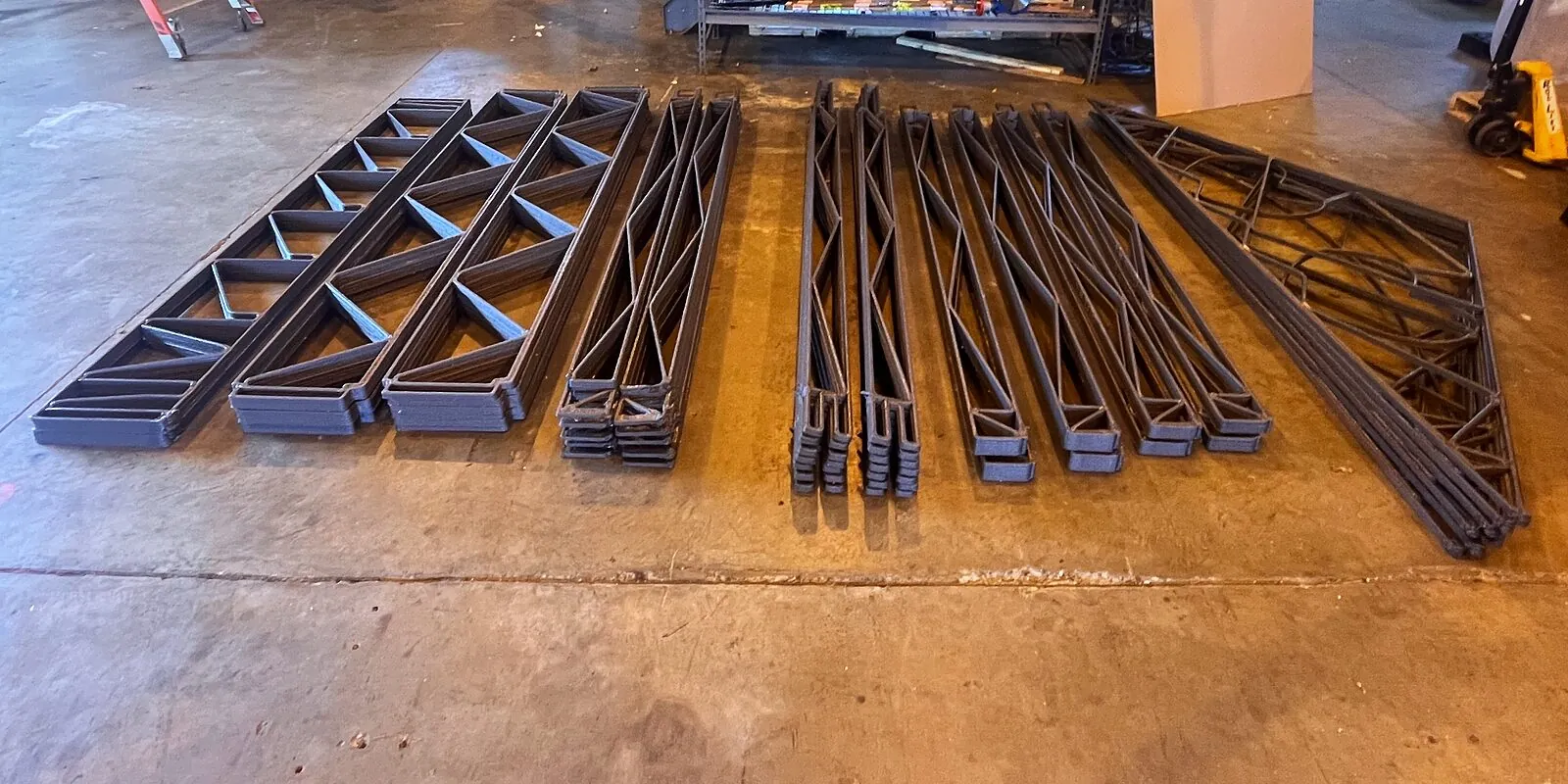
Building the world’s future out of its waste
ATLAS turns discarded plastic into military-grade building components.
The world has a building problem. And a waste problem.
The world needs to build at unprecedented scale, while the materials, labor, and supply chains required to do it are increasingly costly, constrained, and unsustainable.
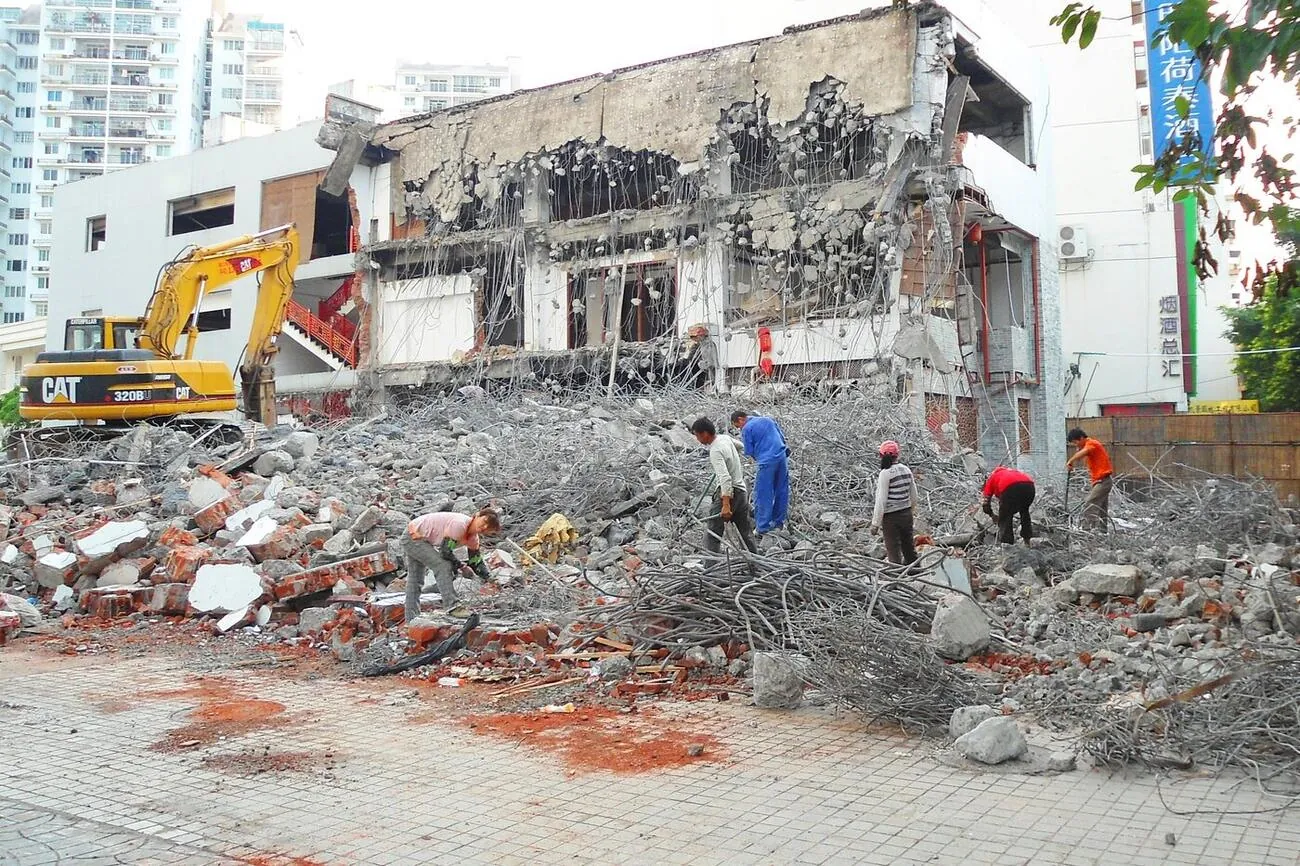
The building problem
The $13T construction industry requires more than 10 gigatons of raw material to build.
$13 Trillion
Annual global construction spending
1 Billion
~500 sq ft homes required by 2045 to support human population growth
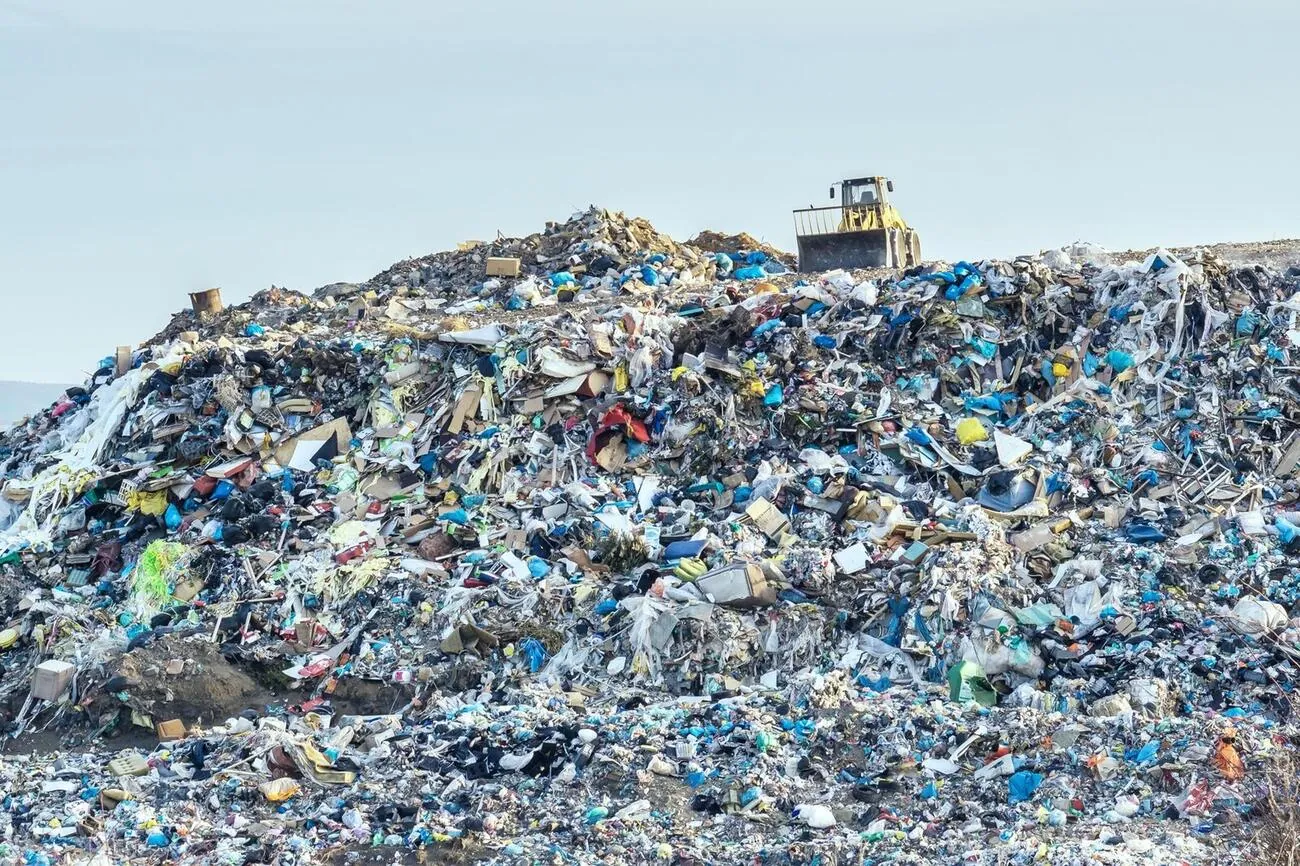
The waste problem
Conventional recycling requires washing, wastewater treatment, and energy-intensive drying.
8.2 Gigatons
Plastic produced since 1950
3.5 Liters
Of freshwater is required to recycle 1 kg of PET
Sources: Associated Builders and Contractors (2026), UN-Habitat (2025), McKinsey (2024), OECD (2022), Data Insights Reports (2026)
Waste exists everywhere. So does the need to build.
ATLAS is creating the system that connects them.
ATLAS is commercializing WATERLESS RECYCLING™, a process that removes costly washing, wastewater treatment, and drying.
Recycling plastic normally takes about 3.5 liters of fresh water for every kilogram of PET to wash it, plus energy-intensive drying. Waterless Recycling™ needs neither, so even dirty, low-cost plastic waste can be used in our process.
WASHING
WASTEWATER
DRYING
How Waterless drives cost down
- Enables use of dirty, lower-cost feedstock
- Eliminates washing and wastewater CAPEX & OPEX
- Removes the energy-intensive drying CAPEX & OPEX
- Reduces water-related permitting and operating complexity
- Simplifies local processing close to both the plastic supply and construction industry demand
Familiar components, fundamentally reimagined.
ATLAS integrates the material, machine, data, and product systems required to transform local waste into repeatable building components.
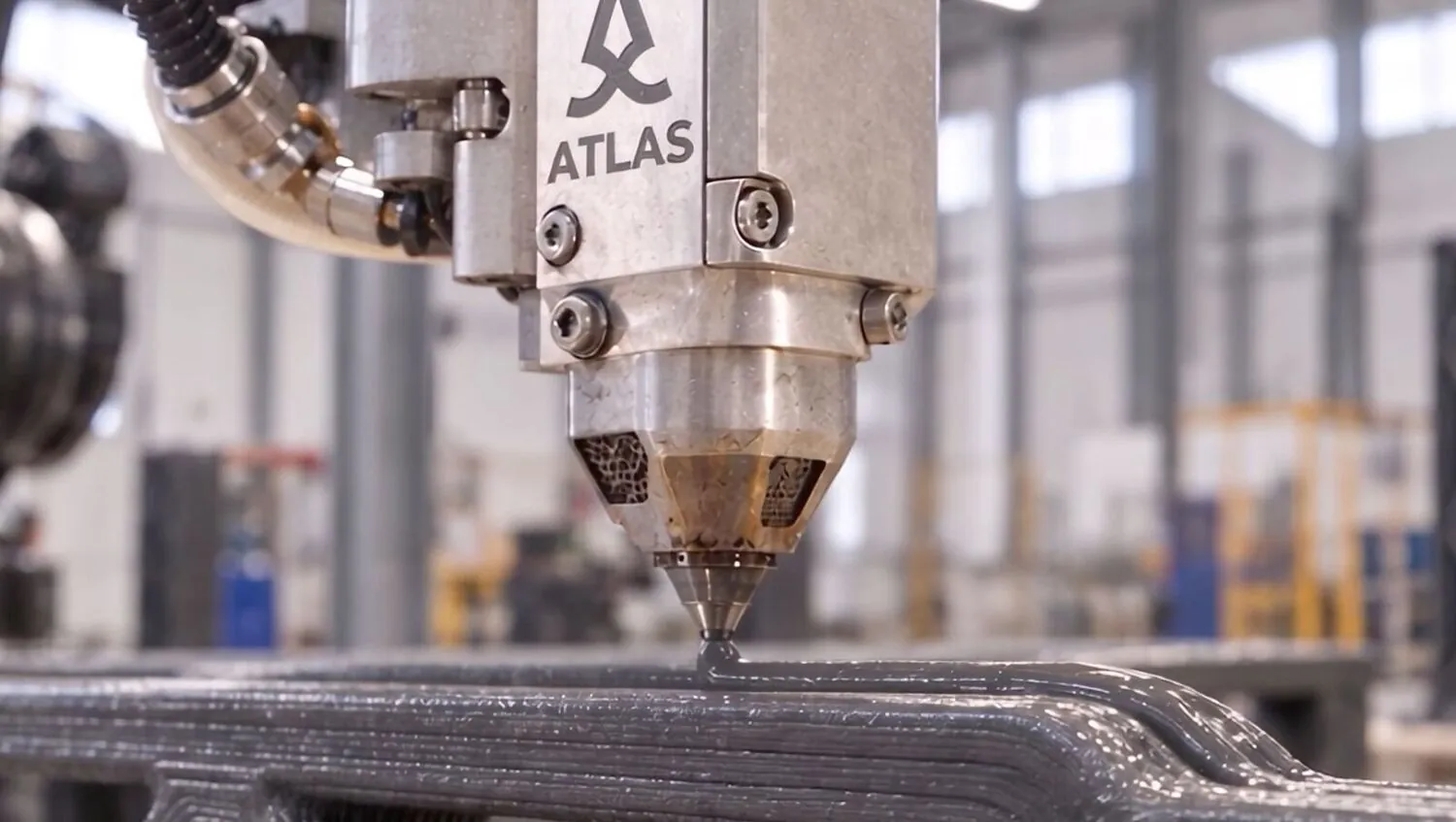
Proprietary composite formulations and robotic AI manufacturing turn waterless feedstock into a catalog of building components.
ATLAS Manufacturing
Concept designed by Gensler
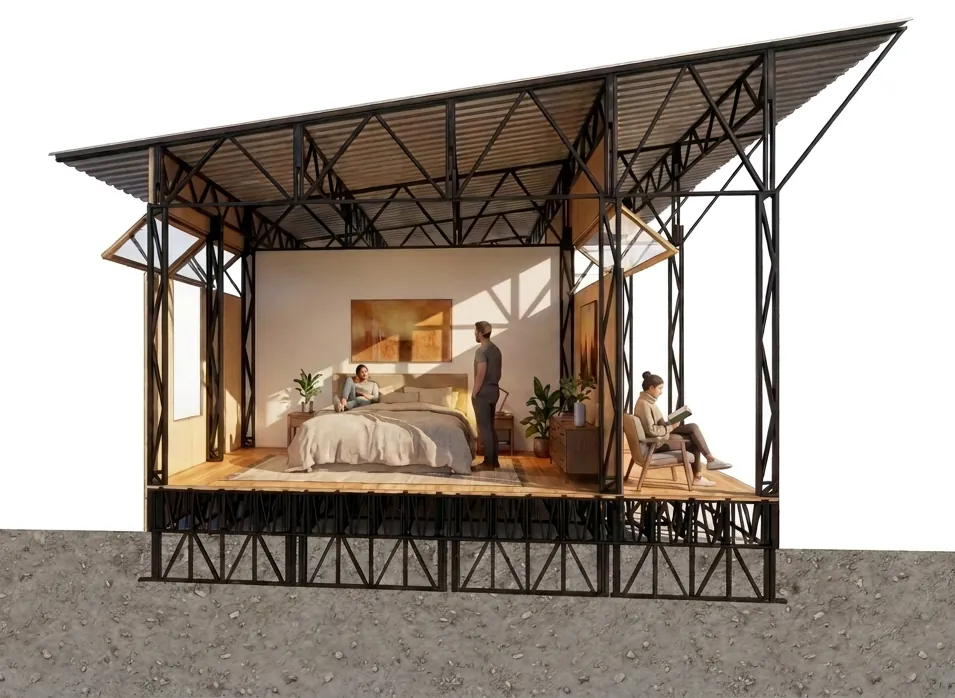
How we will build homes.
A home is a foundation, a floor, a frame and a roof. We will build each one as a factory-made part that goes together on site.
Emergency shelter,
flat-packed.
Every part ships flat and goes together on site in about 2 hours.
Shelter parts, laid flat